Chest and Back Tattoo Placement: Which Should I Choose for My First Tattoo?
BY TATTOOGLYPHS ANGEL
POSTED: JUNE 28, 2026
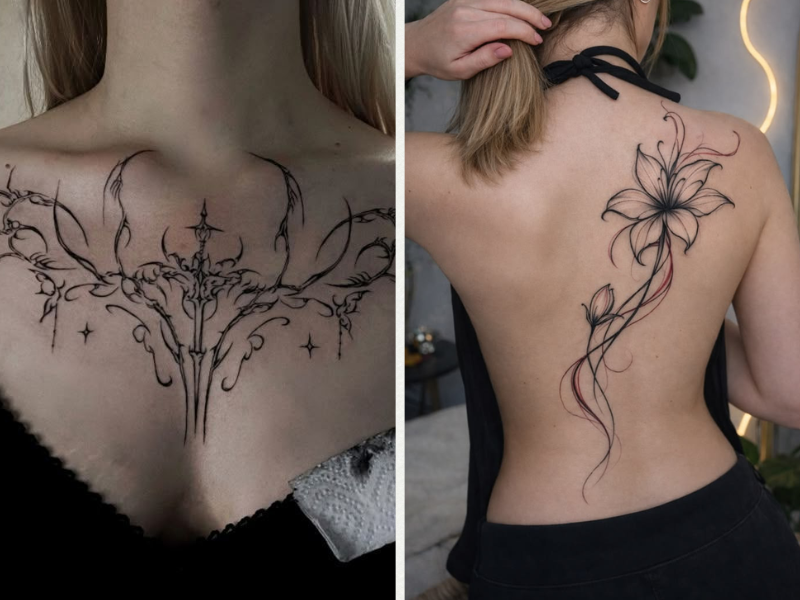
Both the chest and the back sit on your torso, which means they share a few things in common: easy to cover at work, not something you see every day yourself, and enough surface area to do something genuinely impressive. But the experience of getting tattooed in each spot, and what you can do with the space, is pretty different.
If you're deciding between the two for your first tattoo, here's an honest comparison to help you think it through.
What the chest actually offers
The chest tattoo placement is a personal placement. Not in the sentimental sense, though a lot of people do put meaningful work there. Personal in the sense that it faces inward. You glance down and see it. Other people see it when your shirt is off, or when you're wearing something that shows it. It's not a placement that announces itself the way an arm or neck tattoo does.
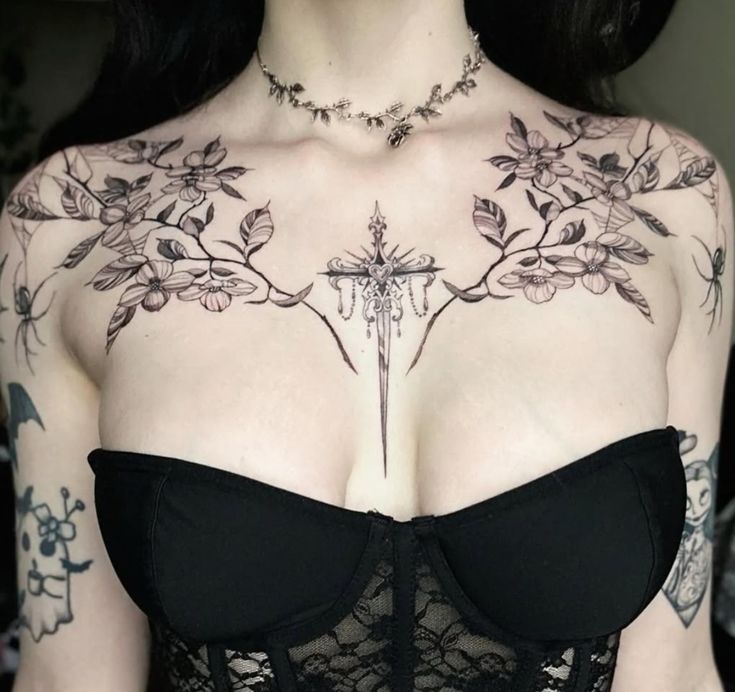
The surface works differently depending on which part of the chest you use. The sternum runs vertically down the center and suits long, narrow compositions like geometric stacks, snake designs, or single botanical stems. The pec area on either side gives you a wider, flatter canvas that handles portrait work, animals, and bold traditional designs well. The upper chest near the collarbone is one of the most requested spots right now, particularly for text and fine-line pieces that frame the neckline.
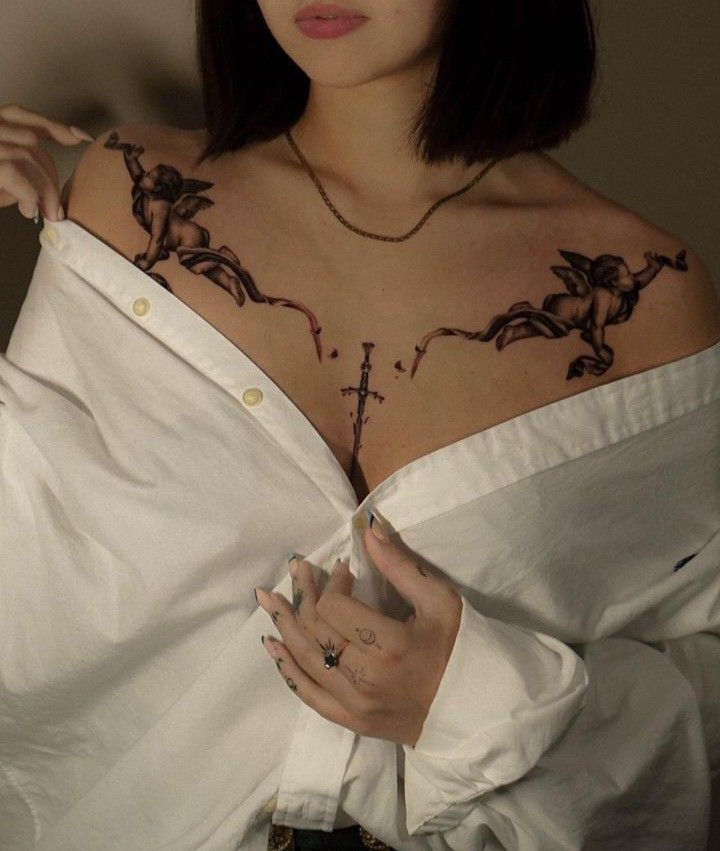
Pain-wise, the chest is moderate for most people. The closer you get to the sternum and the collarbone, the more you feel it. The outer pec is significantly more comfortable. For a first tattoo, starting on the outer pec rather than directly on the sternum or collarbone is a reasonable call.
What the back actually offers
The back tattoo placements is the largest continuous canvas on the human body. A full back piece is the most ambitious single tattoo project most people will ever undertake, and even a mid-size piece placed well on the back carries a visual weight that's hard to match anywhere else.
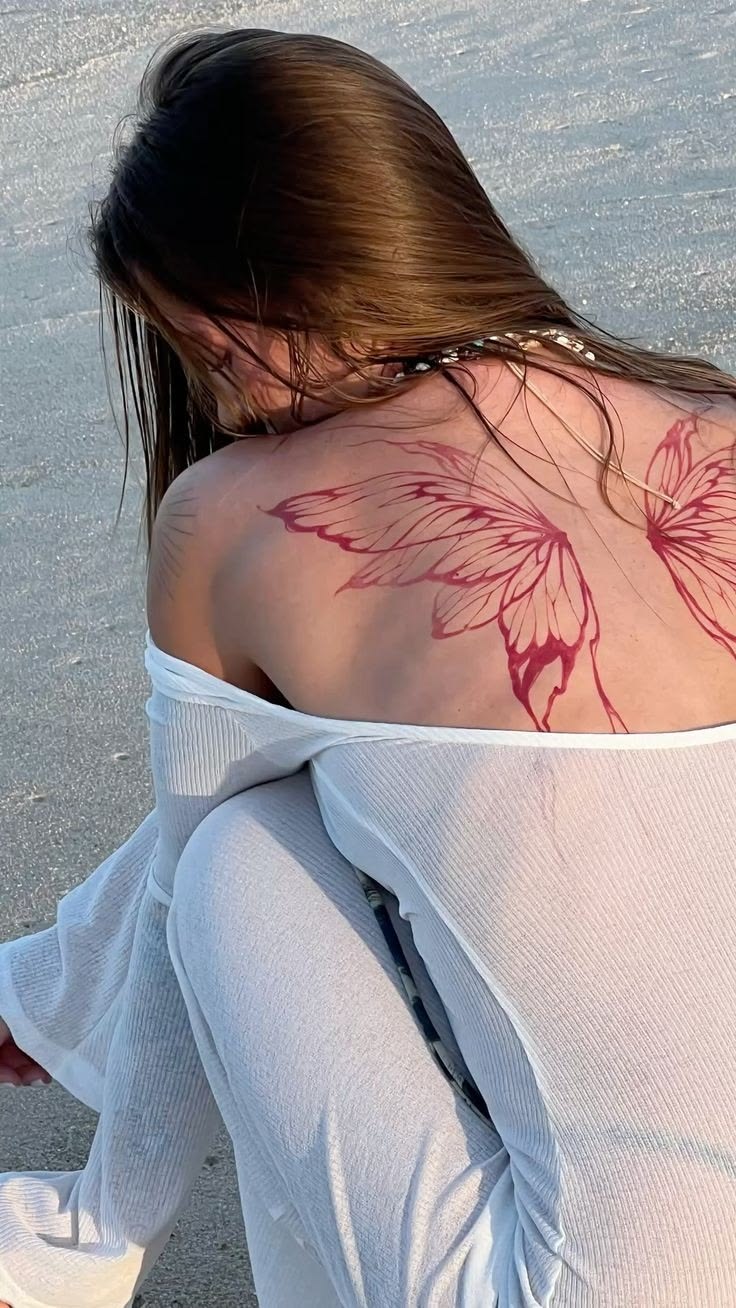
The upper back between the shoulder blades is the most common starting point for people new to back tattoos. It's a relatively flat surface, it heals well, and designs placed there have room to breathe. Wings, mandalas, geometric shapes, and script across the shoulder blades all work naturally in this zone.
The spine is a different proposition. Vertical compositions running down the spine are striking but the process is more intense than most people anticipate. The spine itself is sensitive, and the long, narrow format of a spine piece means you're holding still for a focused stretch of time. Not the easiest first tattoo experience, but not impossible either.
The lower back has a reputation it doesn't entirely deserve. It's actually a solid placement for symmetrical designs, hip-to-hip pieces, and compositions that benefit from the natural curve of the lower spine. The stigma around it is mostly cultural noise.
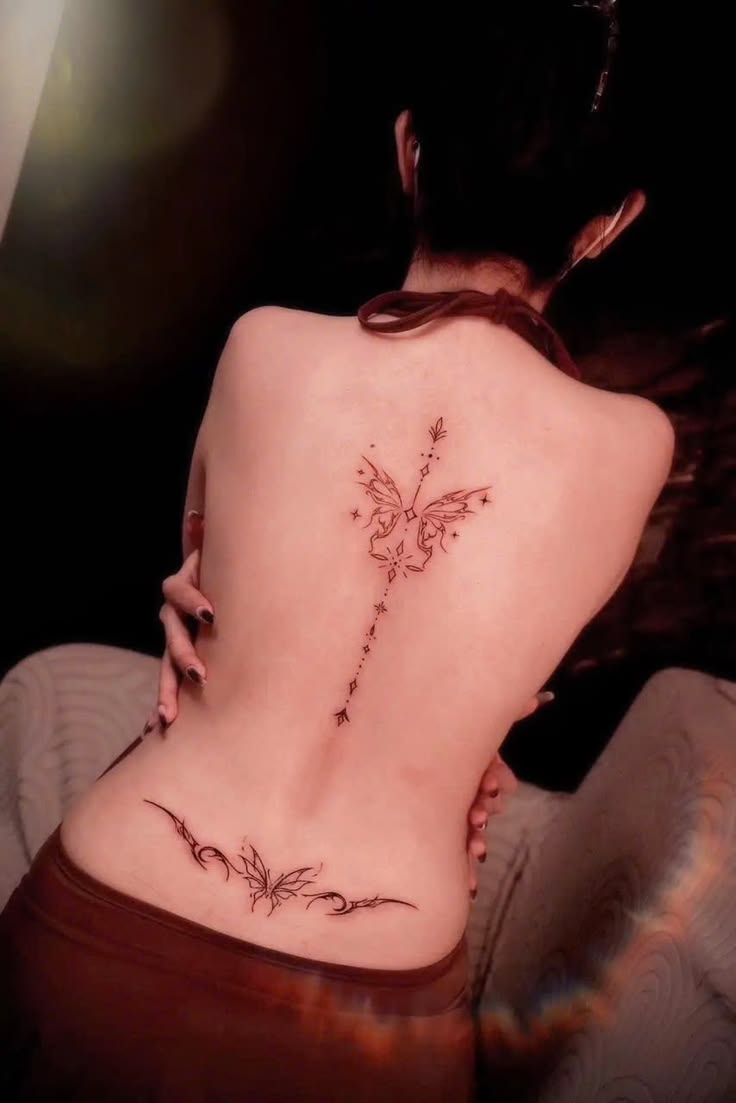
A full back piece, or even a half-back build, is a long-term project involving multiple sessions. If that's where you want to end up eventually, a smaller piece placed in the center upper back gives you something to build from without committing to the full scale upfront.
Chest versus back for male clients
For male clients, the chest tends to be the more popular first choice between the two, and the reasoning usually comes down to visibility and proportion.
The pec area on a male client gives an artist a solid, relatively flat surface that suits bold designs at medium to large scale. A well-placed pec piece at 5 to 8 inches looks proportional against broader chest structure. Japanese traditional, American traditional, and realism all perform well here. The chest also connects naturally into sleeve work if you plan to expand later, with the shoulder and upper arm completing the link.
The back is more commonly chosen by male clients who are thinking in terms of a larger long-term project. The upper back piece that eventually becomes a full back piece is a common trajectory. Male clients with broader shoulders also benefit from the sheer surface area of the back, which allows for large-scale compositions like full dragons, phoenixes, or landscape-style pieces that simply don't fit anywhere else on the body at the scale they deserve.
Pain tolerance tends to be a smaller factor in the chest versus back decision for male clients, since neither placement ranks among the most intense on the body. The ribs and spine are the exceptions, but the core chest and back surfaces are manageable for most people.
Chest versus back for female clients
For female clients, the decision between chest and back often comes down to how the placement frames the body and how visible the client wants the work to be day to day.
The sternum and under-bust area have become two of the most requested placements among female clients over the past several years. A sternum piece runs vertically between and slightly below the chest, often extending toward the ribs on either side. It's a placement that requires the client to be comfortable with the artist working in a personal area, but the results, when done by an artist experienced with this format, are consistently striking. Fine-line floral compositions, geometric chandelier shapes, and mandala-based designs all suit this placement well.
The collarbone and upper chest area also suit female clients particularly well. A delicate design that follows the collarbone line stays visible in everyday clothing without being exposed in professional settings. It reads as intentional and composed rather than loud.
For the back, the upper back between the shoulder blades is a strong first placement for female clients. It's visible in open-back tops and dresses, it heals reliably, and it creates a focal point that photographs well. Script across the upper back, single large botanical or bird compositions, and symmetrical geometric pieces all work naturally here.
The lower back is worth reconsidering with fresh eyes. On female clients with a curved lower spine, a symmetrical piece that follows that natural curve can look genuinely elegant. The key is working with an artist who understands how the design should follow the body rather than fight it.
Tattoo ideas that actually suit these placements
Knowing where you want a tattoo is only half the decision. The design needs to fit the zone, not just sit on top of it. These are ideas that consistently work well on the chest and back specifically, not just generic suggestions that could apply anywhere.
Chest tattoo ideas worth considering
Sternum and center chest. This zone was made for vertical compositions. Snakes are probably the most obvious choice because their natural form follows the sternum line without forcing it. Botanical stems with flowers branching outward work the same way. Moth and butterfly designs centered on the sternum with wings spreading outward onto the chest are another strong option, particularly for clients who want something with visual symmetry. Mandala and geometric patterns also suit the center chest well when the design radiates outward from a central point.
Pec area. This is where you have the most flexibility. A lion portrait facing forward reads powerfully on a full pec. Eagle, wolf, and bear designs are consistently strong here for the same reason: the slightly curved surface of the pec adds a three-dimensional quality to forward-facing animal portraits. For clients who want something softer, a large floral arrangement or single oversized bloom works well on the pec at 5 to 7 inches.
Collarbone and upper chest. Short phrases, single words, and fine-line minimal designs suit this zone. A delicate constellation or a minimal branch design following the collarbone line are both solid choices for clients who want something subtle. This zone also works well as a standalone piece that could eventually connect to a chest or sleeve build.
Back tattoo ideas worth considering
Upper back between the shoulder blades. Symmetrical designs perform exceptionally well here because the shoulder blades create a natural frame. Paired wing designs, whether bird wings, angel wings, or abstract geometric wings, are a classic choice for this reason. A large mandala centered between the shoulder blades is another strong option. For clients who want something more narrative, a landscape scene or forest line works well as a horizontal composition across the upper back.
Spine. The spine suits anything with a strong vertical structure. A stack of geometric shapes, a single lotus-to-roots botanical composition, a series of symbols with personal meaning, or a simplified tree with roots pointing downward and branches reaching toward the neck all follow the spine's natural axis. Text in a single column also works here, though the font choice matters more than in most placements since legibility at that scale and orientation is harder to achieve.
Full back and lower back. Large-scale compositions that wouldn't fit elsewhere come into their own here. A full phoenix or dragon that occupies the entire back is one of the most ambitious single tattoo projects someone can undertake, and the back is the only placement where it genuinely works at that scale. For the lower back, symmetrical designs that follow the natural curve of the spine base, whether geometric, floral, or abstract, make better use of the space than designs that ignore that curvature.
How to make the final call
If you want something personal that you'll see occasionally and others will see when you choose to show it, the chest makes sense. It's accessible, versatile across most design styles, and a reasonable starting point in terms of pain for most people.
If you want to invest in a placement with more long-term potential, the back gives you more to work with. A smaller piece placed well on the upper back can anchor a much larger project down the line, and the surface itself rewards ambitious design in ways the chest can't quite match at the same scale.
Neither placement is wrong for a first tattoo. The better question is what you want the tattoo to do for you, and which placement gives that design the best possible home.